

A well-organized closet isn’t just about making everything look neat. It’s about creating a space that works with your everyday routine—so getting dressed is easier, putting things away is intuitive, and your systems are simple enough to maintain.
When we organize a closet, we think about more than where things fit. We consider how often you use them, how you naturally move through the space, and how to make everything as visible and accessible as possible.
Here are some of our favorite ways to create a closet that stays organized long after the initial refresh.
Prioritize your prime real estate
Not every item in your closet needs to be equally accessible. Start by thinking about what you reach for most. If you have drawers, prioritize them for your most-used pieces—like intimates, t-shirts, and athletic wear. Hanging space is best reserved for items like dresses, blazers, and other pieces that benefit from staying wrinkle-free.
For less frequently used items, look beyond your most convenient storage. Bulky sweaters can live on shelves, while seasonal or occasional pieces can be tucked into bins or baskets.
Create consistency with your folding
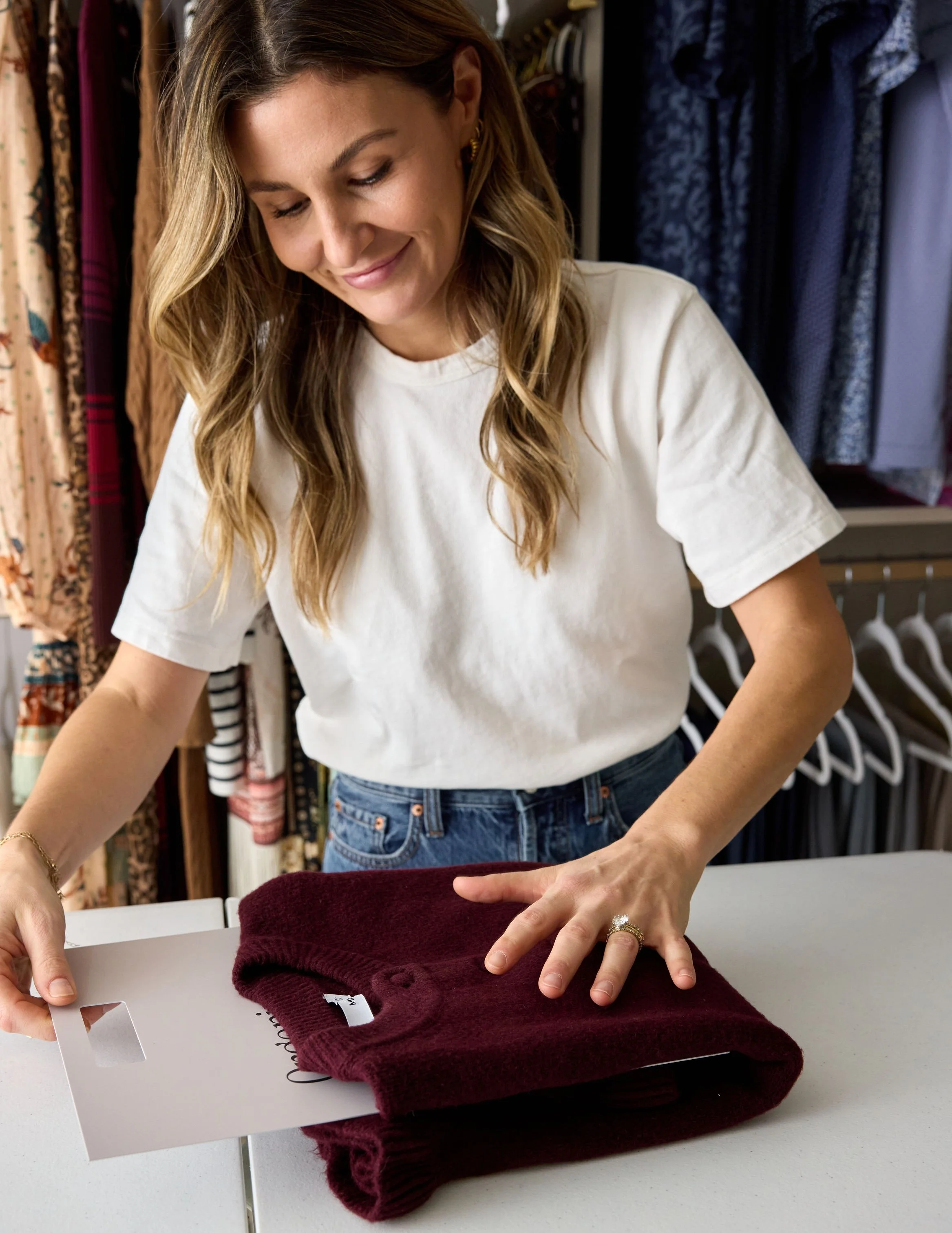
Folding is one of the simplest ways to make a big difference in your closet. Consistent folds optimize drawer and shelf space while making it easier to see everything you own. Instead of stacking clothing in a way that requires digging, fold pieces to uniform size so each item is accessible.
Our folding trick:
Choose one item in your preferred folding width and use it as a template for the rest of the category. Or make it even easier with our Folding Boards. Designed to create crisp folds every time, they’re an easy way to recreate the system your organizing team created for you—and keep those drawers and shelves looking clean.
Make everything easy to see
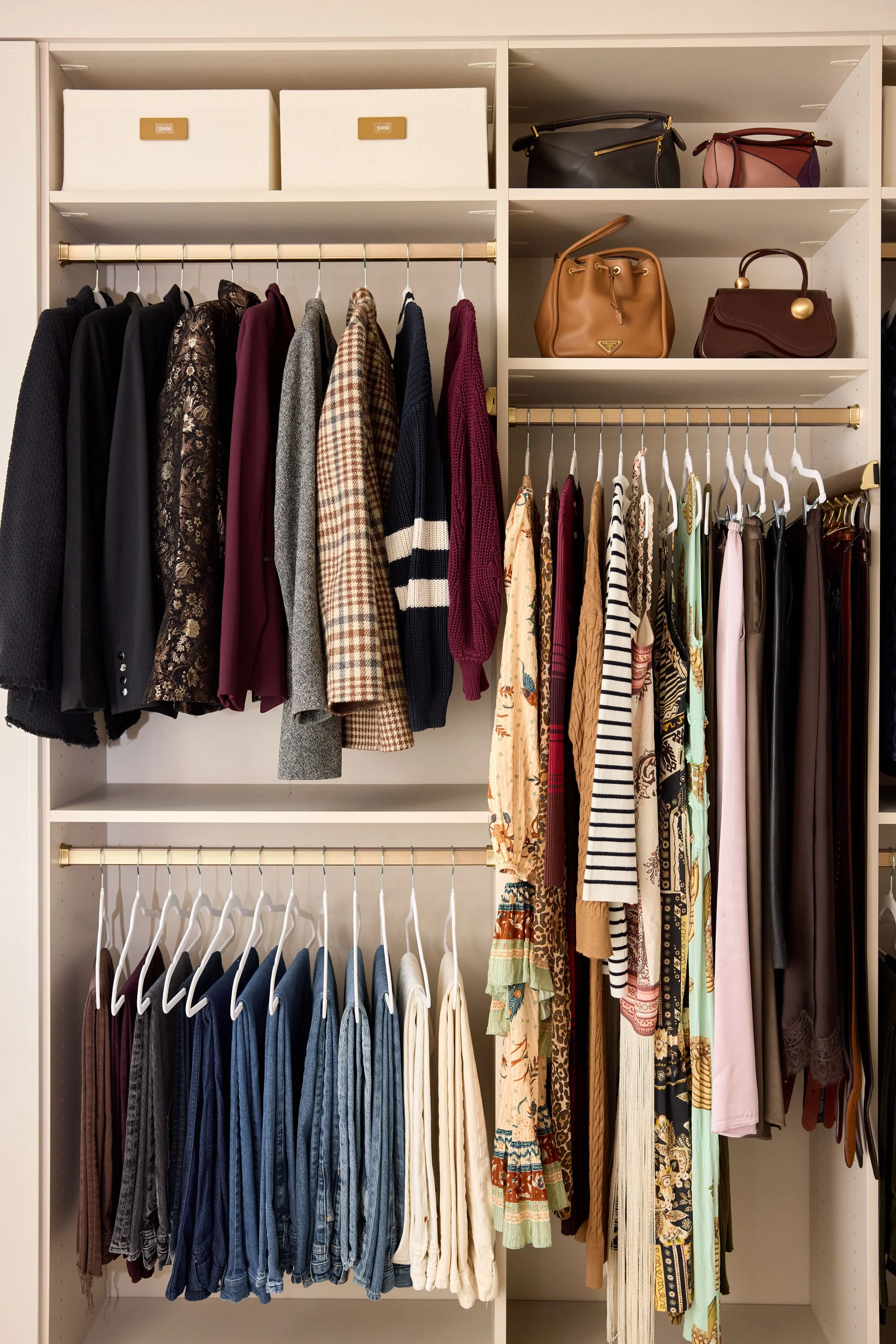
If you can see something, you’re much more likely to wear it! That’s why we love using eye-level shelves to display shoes, handbags, jewelry, and accessories. Rather than hiding these pieces away, give them a home where they’re easy to spot and reach.
The same principle applies to your hanging clothes and drawers. Visibility is key to maintaining an organized space. When you know what you have, you’re less likely to create a pile of forgotten clothes or buy something you already own.
Give your closet a visual flow
A little consistency can make a closet feel instantly more cohesive—and easier to navigate. For hanging clothes, we recommend keeping all items facing the same direction so you can easily see the front of each garment. Aim your hangers toward the front of the closet, which is typically the direction you approach when the door opens.
We also love color coding within each category. Our rule is dark to light, left to right—this creates a natural visual flow and makes finding what you’re looking for easier.
And don’t feel like you have to organize your entire closet by color. Instead, apply the system within each zone—pants together, shirts together, blazers together, and so on.
Use every inch of your closet
When storage is limited, look beyond the obvious. The space underneath hanging clothes, above shelves and rods, behind doors, and even on the floor can all provide opportunities for additional storage.
Try:
Adding a shoe rack or standing drawers to open floor space
Using stackable storage when there’s unused vertical space
Adding an extra shelf if there’s a large gap between your existing shelving and the ceiling
Installing a door rack or hooks for shoes and accessories
Before adding more storage products, look at the space you already have. You may be surprised by how much potential is hiding in plain sight!
Protect the pieces you love
Organization is also about taking care of your belongings. For collared shirts and pieces with buttons, we recommend unrolling the sleeves before hanging. You don’t need to button every button, either—just the top and the third button helps prevent creases while maintaining the structure of the garment.
Small habits like these help your clothes stay in good space and make your closet easier to handle over time.
An organized closet should work for you
The best closet system isn’t necessarily the one with the most products or the most perfectly arranged shelves. It’s the one that makes your everyday routine easier.
Prioritize the space you use most. Keep your belongings visible. Create consistency with your folding and placement. And don’t be afraid to use walls, doors, floors, and vertical space you’ve already been given.
Check out our Closet Guide for our full approach to editing, organizing, and creating a closet that works for you.